Background
An Integrated Pest Management Plan (IPMP) outlines the methods used to manage vegetation like invasive plants around power poles, noxious weeds within substations and underneath powerlines, and pests that rot and erode the functional integrity of wooden power poles.
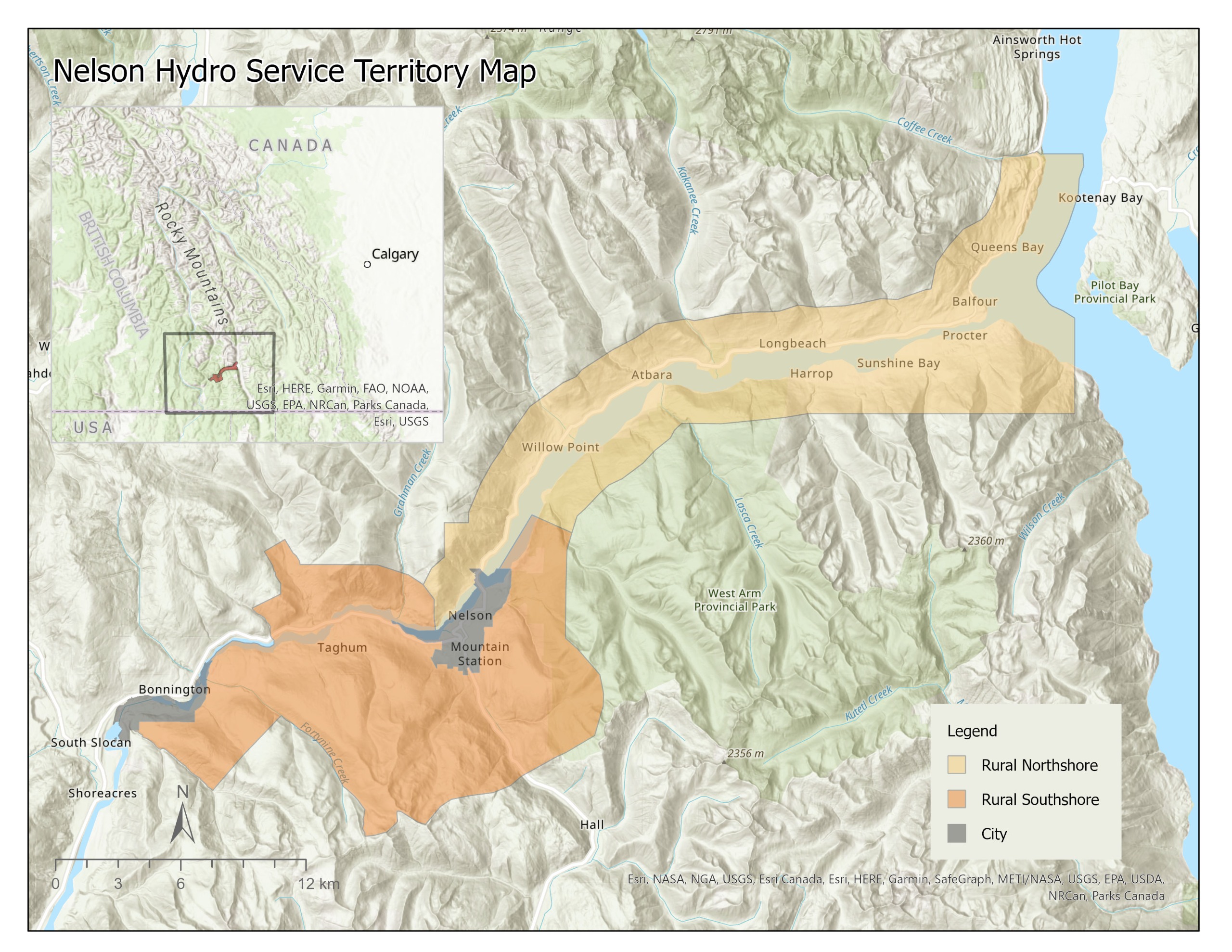
Nelson Hydro is required by the Ministry of Environment and Parks to file a IPMP every five years. Nelson Hydro's previous five year PMPs ran from 2015 to 2020 and from 2020 to July 15th 2025. They are now being updated for another five years. Nelson Hydro uses 3 Pest Management Plans; one for facilities like substations, one for rights of way under powerlines, and one for wooden power poles.
The PMPs ensure that:
- all work within the Nelson Hydro service territory complies with the Integrated Pest Management Act (IPMA) and Integrated Pest Management Regulation (IPMR), as well as all applicable federal, provincial, and regional laws and regulations;
- strategies are developed and implemented to protect domestic and agricultural wells, endangered wildlife, riparian areas, fish, water intakes, and other sensitive ecosystems;
- protocols for the responsible use of pesticides, public notification, and record-keeping are followed; and
- only products approved by Health Canada are used.
How IPMPs are used
Substations
Nelson Hydro owns power stations and substations that help deliver electricity. These places are fenced off and not open to the public.
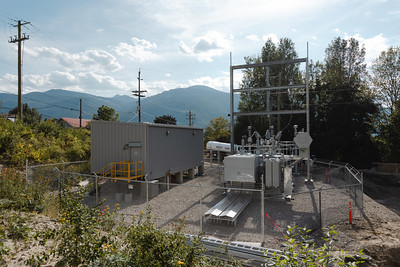
Keeping plants under control inside these facilities is very important for safety. If lightning strikes or there’s an electrical problem, electricity can travel through the equipment into the ground. If weeds or plants are in the way, they can catch fire or carry electricity. This could shock workers and cause serious injury or even death.
To keep facilities safe, Nelson Hydro uses different methods to stop plants from growing:
- Gravel surfaces to block plant growth
- Clear fences with no plants around them
- Brushing, mowing, trimming, or pulling weeds by hand
- Planting short native plants or grass
- Using natural controls like insects or plant diseases to reduce weeds
- Carefully applying chemicals (herbicides or pesticides) with sprayers or paste
The best way to control plants depends on several things:
- Meeting electrical safety rules
- What kind of land is nearby (public, private, or farmland)
- How close water or sensitive habitats are
- Possible effects on wildlife, fish, workers, and neighbors
- Safety, security, and cost concerns
- Soil type and the kinds of unwanted plants present
Nelson Hydro looks at all these factors before deciding which method to use. We also think about how easy the site is to reach and what could happen if plants aren’t controlled.
Wood Poles
Nelson Hydro owns wooden power poles that can be found along power line corridors, roads, and inside power stations. These poles are placed on private, city, and Crown land.
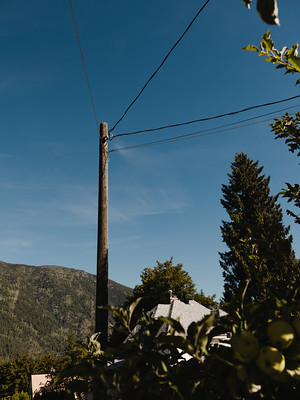
Taking care of wooden poles is very important for safety and reliable electricity. Strong poles help prevent power outages and lower the risk of pole fires.
To protect poles from damage caused by insects (like termites, ants, and beetles) and fungi, Nelson Hydro uses several methods:
- Buying new poles that are pre-treated so chemicals don’t leak into the ground
- Checking poles visually every 8 years
- Inspecting inside the poles (above and below ground) every 8 years using tools like probes and drills
- Treating only poles that pass tests
If a pole is still strong enough to meet safety standards, workers may apply wood preservatives directly to fight insects or fungi. If the pole is too weak, it is replaced.
If a pole fails testing, Nelson Hydro may stub the pole (add support to the base) or replace the pole entirely.
Powerlines
A right-of-way is land used for power lines and utility equipment. It includes corridors, roads, and areas where poles, wires, substations, and other power facilities are located.
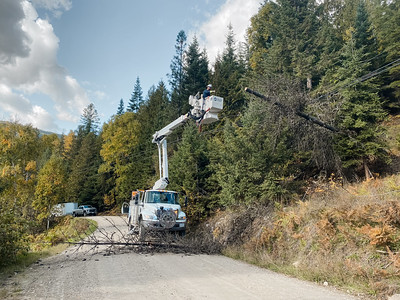
Managing plants in these areas is very important because it:
- Keeps workers and the public safe
- Prevents trees from touching power lines and causing outages
- Reduces the risk of fires near equipment
- Makes it easier to see and inspect power lines before work begins
- Meets safety rules set by WorkSafeBC
- Follows the BC Weed Control Act, which requires stopping harmful weeds
Nelson Hydro uses different methods to control plants in rights-of-way:
- Physical treatments like brushing, mowing, trimming, and pruning
- Encouraging grass and short native plants that don’t interfere with power lines
- Planting low-growing trees that are safe near electrical equipment
- Biological controls like fungi or insects to target problem weeds
- Careful chemical treatments applied directly to leaves or stumps
The best method depends on:
- How much clearance is needed for safety
- The type, size, and amount of vegetation
- Where the plants are located (near homes, farmland, or waterways)
- How easy the area is to reach (terrain, slope, or remoteness)
- Weather conditions
- Safety concerns for workers, the public, and fire risk
- The overall goals of vegetation management
No Treatment and Pesticide Free Zones
When managing vegetation in rights-of-way, Nelson Hydro follows strict safety and environmental rules to protect people, wildlife, and the land.
- No Treatment Zones (NTZ): At least 15 meters around streams, fish, wildlife, and sensitive habitats
- Pesticide Free Zones (PFZ): Boundaries are marked before any pest control work begins
- Safe pesticide use: Chemicals are applied carefully so endangered species and habitats are not harmed
- Protecting shrubs and plants: Low-growing plants used by wildlife for food or shelter are not treated
- Equipment safety: No cleaning, fueling, or refilling machines within 15 meters of an NTZ
- Wildlife protection: PFZs are set up around bird nests (raptors, herons), wildlife trees, and mineral licks
- Food safety: PFZs are mapped around gardens, berry patches, and beekeeping areas
- Agriculture buffer: 100 meters around farmland (Agriculture Land Reserves)
- Water safety: 30 meters around wells and water intakes
- Weather rules: All treatments stop if wind is stronger than 8 km/h or if it starts raining
Qualified Personnel
Nelson Hydro only hires contractors that are trained and certified to use pesticides. They must have a Pesticide Applicator Certificate and a valid BC Pesticide User License.
The plan includes rules to make sure pesticides are used safely. These cover:
- Who can apply pesticides and what their responsibilities are
- How to safely transport pesticides
- How to store pesticides properly
- How to mix, load, and apply pesticides safely
- How to dispose of empty or unused containers
- What to do if a pesticide spill happens
Treatment Process
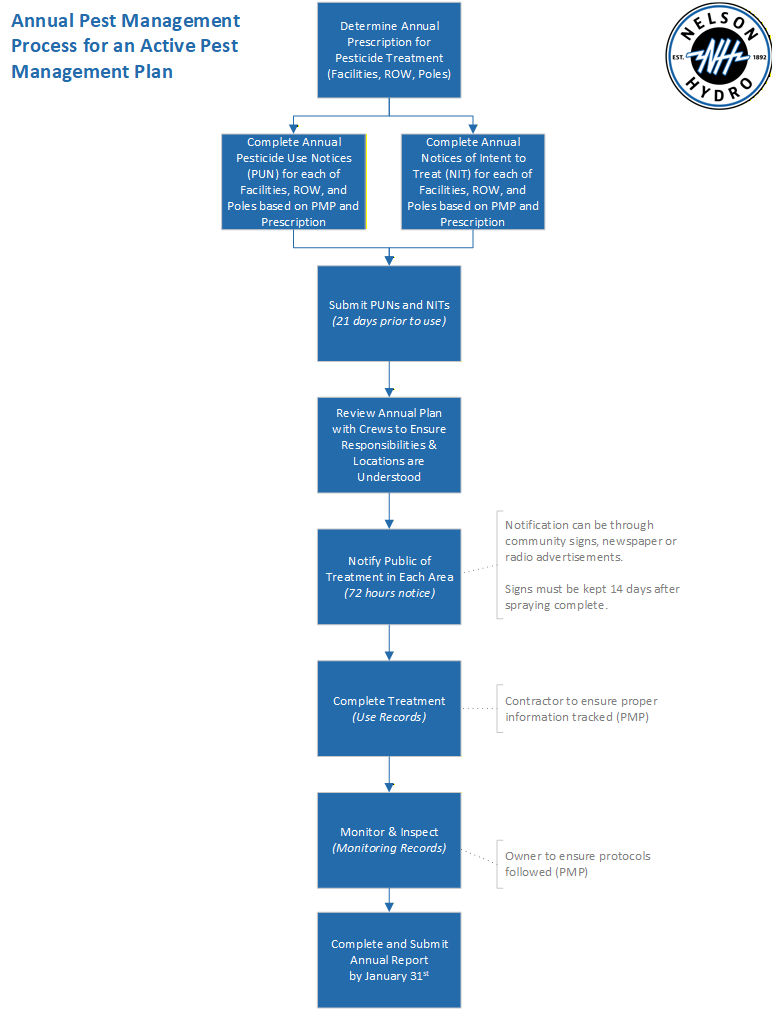
Did you know...
-
Nelson Hydro has only applied glysphosate twice within the last 10-years, both times at our locked, fenced facilities.
-
Non-chemical methods are the first choice of Nelson Hydro with chemical treatments only to be used as a last resort.
-
Nelson Hydro tests wood poles every 8-years. Poles that pass are treated to ensure longevity and to preserve the structural integrity for reliability and safety.
-
Nelson Hydro only uses certified and trained professionals to perform vegetation management using non-chemical and chemical methods.
-
Nelson Hydro must follow the regulatory process for public engagement as set by the Ministry of Environment. This includes the prescriptive content and timelines for advertisements.
Options going forward
Your voice matters.
Integrated Pest Management Plans (IPMPs) are mandated by the Ministry of Environment and Parks. They ensure that Nelson Hydro follows legislation outlined in the Integrated Pest Management Act. Without an IPMP, there is no accountability.
These proposed options for the 2025-2030 IPMPs have pros, cons and costs that may impact electrical rates.
- Only use pesticide for control of invasive species in the Rights-of-Way IPMP*
- Remove specific chemicals from the Rights-of Way IPMP*
- Remove all chemical treatments from the Rights-of-Way IPMP*
Click the tabs below to read each of the options listed below.
*Note: Facilities IPMP and the Pole IPMP are proposed to remain as-is to ensure safe and reliable electricity.
Option 1
Only use pesticide for control of invasive species in the Rights-of-Way IPMP
In this option, the IPMP is modified to:
- include a more robust consultation process with individual landowners
- remove language for the use of chemicals to treat vegetation interfering with utility structures
This option promotes the use of manual, cultural or biological treatments for managing vegetation interfering with utility structures.
Option 2
Remove specific chemicals from the Rights-of-Way IPMP
In this option, specific named chemicals (like glyphosate) would be removed from the Rights-of-Way IPMP to eliminate its use going forward.
Manual, cultural and biological treatments would be used as the primary treatment methods. This includes:
- brushing, slashing, mowing, frilling, girdling, grooming, trimming and pruning
- planting low-growing trees and shrubs
- planting compatible tree species that are low growing like juniper and other dwarf varieties of local vegetation
- using agents such as fungi or insects (beetles, weevils, moths, and flies) specifically targeting problem weed species
- using a biological paste to inhibit the re-sprouting and re-growth by applying it through a squeeze bottle on freshly cut stumps. The common name for this product registered in Canada is Chontrol Paste®
The downside of this option includes spending more on vegetation management, including hiring more staff or contractors. Increasing the vegetation management budget directly impacts and increases electrical rates.
Option 3
Remove all chemical treatments entirely from the Rights-of-Way IPMP
In this option, only manual, cultural, and biological treatments would be used to manage vegetation with Nelson Hydro rights-of-way.
This is the most expensive option for Nelson Hydro as additional staff and contractors will be required to perform more vegetation management every year. As this is our current practice, we are noticing that the regrowth rates are increasing for specific species of vegetation. What once was trimmed every 3-years has now decreased to every year. Increasing Nelson Hydro's vegetation management budget also increases electrical rates.
Controlling the spread of invasive species may become a challenge for things like Knotweed, for example, that can only practically be treated using herbicide as mechanical removal requires large scale excavation and risks spreading plants through contaminated soil. Knotweed is the number one Provincial priority for management on public lands due to its negative ecological and economic impacts.
Approach | Cost | Effectiveness | Acceptance |
|---|---|---|---|
| Chemical (Herbicides) | cheaper upfront, less labor-intensive | fast, reliable suppression of invasive plants | public concern about health, environment, and water safety |
| Mechanical (Cutting, Mowing, Hand Removal) | labor-intensive, recurring costs | effective for small areas, but regrowth is common | widely accepted as safer |
| Biological (Insects, Pathogens, Grazing) | requires research, monitoring, and approvals | can be highly effective but slower, species-specific | concerns about unintended impacts |
Our perspective...
-
Nelson Hydro has never and has no plans for aerial or widespread application of pesticides in its rights-of-ways.
-
If Nelson Hydro were to apply pesticides on private property, we’d get permission from the owner before doing so. We expect landowners to manage their own vegetation on their private property that interferes with or contacts Nelson Hydro owned poles and lines.
-
Nelson Hydro has a duty to manage invasive species. As of now, we have included the ability to potentially use pesticides as we have been advised that there is no better option. This situation is infrequent and work will always be done by licensed applicators with targeted application.
Provide feedback
Vote on Options
Please vote on the proposed options above
This poll has concluded.
- Option 1: Only use pesticide for control of invasive plant within rights-of-way 6% (7 votes)
- Option 2: Prohibit specific chemicals from being used in rights-of-way 16% (18 votes)
- Option 3: Remove chemical treatments entirely for rights-of-way 78% (87 votes)
Total Votes: 112
Impact on Electrical Rates
Ask a question
{{ activityStatus ? $t("activityStatus.open") : $t("activityStatus.closed") }}
{{ activityCloseText }}
To ask a question you must create an account or log in.
These are the people that are listening and responding to your questions.

Scott Spencer
General Manager, Nelson Hydro
Duplicate question
Open question
Answered question
Question with unpublished answer
{{ question.upVotes }} votes |
{{ question.views ? question.views : 0 }} views
{{question.description}}
Unpublished Answer
Answer
No questions found
Leave a comment
CLOSED. The visioning activity has now concluded. Click to see all the submitted ideas.
14 December, 2025
hillbillyheightsfarm says:
This is an opportunity for NH to lead the way and discontinue the use of toxic chemicals. Research into the use of these is inconclusive.
11 December, 2025
Martin says:
study that said glyphosate was safe retracted https://ca.finance.yahoo.com/news/study-said-glyphosate-herbicide-safe-175818075.html
3 December, 2025
mshunter says:
invasive species are only non-native; please do not misrepresent this. Glysphosate used twice in 10 years; obviously not needed. Manual best
28 November, 2025
GregMantle says:
Years in the golf industry taught me to not use chemicals
They used to sell us mercury also and smiled !
No one knew how deadly it was!!
25 November, 2025
ryanseanj says:
Is there a 4th option, where the experts (the regulatory authorities, Nelson Hydro and its consultants) make the decisions re: PM?
25 November, 2025
BMiller says:
If hydro decides to go ahead with the civilian task force for innovative/higher standard ways to deal with invasive species contact me.
25 November, 2025
Gall says:
https://www.cbc.ca/news/canada/british-columbia/lheidli-tenneh-herbicide-glysophate-forestry-prince-george-9.6991032
23 November, 2025
RWarwick says:
NH has a good hierarchy it follows to ensure the applications are reflective of the risk. That should be reflected in the iPMP.
22 November, 2025
EDavies says:
Your PMP gives carte blanche to use these herbicides, with no details on quantity or area of use, with no consideration for community water
19 November, 2025
Gin65 says:
The city should NEVER be using glyphosate anywhere. It is completely toxic, causes cancer, and destroys the human gut microbiome. Just NO!
19 November, 2025
mcckevy says:
Stop with the use of chemicals. there are more and more studies showing harm . Hire a bunch of students or homeless , its a win win .
19 November, 2025
Dinamyt says:
Your Options: money seems to be your determinant to do less to protect the land and water. This is blatant mismanagement and blackmail.