Part 9 Buildings-Simple
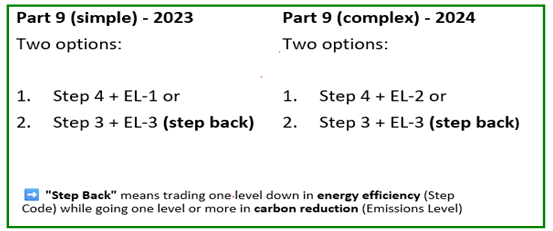
Option 1
- BC Energy Step Code Step 4
- Zero Carbon Step Code EL‑1
Option 2 (Step‑Back Option)
- BC Energy Step Code Step 3
- Zero Carbon Step Code EL‑3

The City of Nelson is considering updates to its Building Bylaw to improve the energy efficiency and reduce greenhouse gas emissions from new buildings.
These proposed changes align with provincial frameworks such as the BC Energy Step Code and the BC Zero Carbon Step Code. Together, these programs help communities gradually increase building performance so that new buildings use less energy and produce fewer emissions over time.
Buildings are one of the largest sources of energy use and greenhouse gas emissions in many communities. Improving the efficiency of new buildings helps:
Since the Step Code was introduced in 2017, the City of Nelson has been an early adopter of higher building performance requirements.
Updates to the Building Bylaw that would gradually increase performance requirements for Part 9 buildings. These typically include low-rise residential buildings such as single-family homes, duplexes, townhouses, and small apartment buildings.
The proposed timeline is:
December 31, 2026
December 31, 2028
This phased approach gives builders, designers, and homeowners time to adapt to higher performance standards.
The proposed bylaw amendments do not currently change requirements for larger buildings (Part 3 buildings) such as larger apartment buildings or commercial structures.
Because these buildings are more complex and use different compliance pathways, City staff plan to return in 2027 with potential options after additional local data and engagement.
The Province of British Columbia has already set minimum performance requirements for new buildings through the BC Building Code. Currently:
Municipalities can choose to adopt higher steps over time to meet local climate goals.
Nelson has consistently been a leader in advancing building performance requirements since the introduction of the Step Code and has climate commitments that support reducing operational emissions from new buildings. City of Nelson Bylaw current bylaw requirements for Part 9 are:
To make sure the proposed changes reflect local realities, City staff spoke directly with members of the Nelson building community, including builders, designers, and energy advisors. These conversations provided practical insights into:
Key themes from these discussions include:
A common concern when increasing building performance is the potential impact on construction costs and housing affordability. While Nelson does not yet have a local cost study for Step 4 or Zero Carbon requirements, provincial studies provide useful insights:
Overall: For local Part 9 residential construction, higher energy efficiency and zero-carbon requirements are generally cost-neutral or modest in impact, and in some cases may even reduce costs—particularly when electric systems and energy-efficient design are used from the start.
The BC Energy Step Code is a provincial regulation introduced in 2017 to improve energy efficiency in new buildings across British Columbia. Its goal is to support more comfortable, healthier, and energy‑efficient homes and buildings, while helping communities reduce energy use and greenhouse gas emissions over time.
The Step Code is made up of a series of “steps”. Each step represents a higher level of energy performance. Together, these steps provide a clear pathway toward net‑zero energy‑ready buildings.
Local governments, including the City of Nelson, can choose which step to apply in their community based on local priorities, climate, and housing needs. As long as they meet the code minimum or higher at any given time.
Before construction, a qualified energy advisor completes a ‘pre-construction energy compliance report’ that evaluates the building envelope, mechanical systems, and overall energy demand. This model demonstrates how the proposed design meets the required Step Code level.
During construction, the building is constructed in accordance with the pre-construction compliance report to achieve the modelled performance targets.
Before occupancy, an on-site airtightness test is completed to verify that the building performs as intended; windows and mechanical systems are checked to confirm energy efficiency, comfort, and compliance with the Step Code.
Before occupancy is granted on the building, an “as built energy compliance report” is produced by the energy advisor demonstrating compliance.
The BC Energy Step Code is valuable for our community by creating energy-efficient, comfortable buildings that will serve residents well today and into the future, while reducing building-related operational emissions and further aligning with Nelson Next targets.
The Zero Carbon Step Code is a provincial requirement designed to reduce or eliminate carbon emissions from new buildings by addressing emissions associated with energy sources used for heating, cooling, and hot water. It encourages the use of low-carbon mechanical systems and energy sources to support building decarbonization.
The Zero Carbon Step Code uses a four‑step, tiered approach, called Emission Levels (ELs):
Proposed new buildings must submit a pre‑construction compliance report prepared by a qualified Energy Advisor prior to the start of construction. The report identifies the required Emissions Level (EL) for the project’s location. After all building systems are installed, the Energy Advisor reviews the completed work and prepares an as‑built compliance report to confirm compliance and support building occupancy.
The Zero Carbon Step Code advances Nelson Next climate goals by reducing operational emissions from new buildings while continuing to support the construction of homes and buildings our community needs.
As of August 2023, the City of Nelson provides multiple compliance options to meet the BC Energy Step Code and Zero Carbon Step Code. Requirements vary by building type and are designed to offer flexibility while supporting energy efficiency and emissions reduction goals.
| Part 9 -Simple Buildings | Part 9 – Complex Buildings | Part 3 Buildings |
Typical examples:
These are smaller, straightforward buildings covered under Part 9 of the BC Building Code. | Typical examples:
These buildings still fall under Part 9 but involve more complex layouts, systems, or uses. | Part 3 applies to larger or more complex buildings, including:
These buildings require more advanced design, typically by qualified professionals |
Option 1
Option 2 (Step‑Back Option)
Option 1
Option 2 (Step‑Back Option)
To ask a question you must create an account or log in.
These are the people that are listening and responding to your questions.

Building Official
{{question.description}}
Have questions or want to learn more about a project, contact us below:
| Phone | 250-352-5511 |
|---|---|
| Website | www.nelson.ca |
| In writing | Suite 101, 310 Ward Street |
Land Acknowledgment
The City of Nelson acknowledges that it resides and operates within the unceded traditional territories of the Sinixt, the Syilx, and the Ktunaxa peoples.